8 Tarot Spreads for Beginners (From One Card to Five)
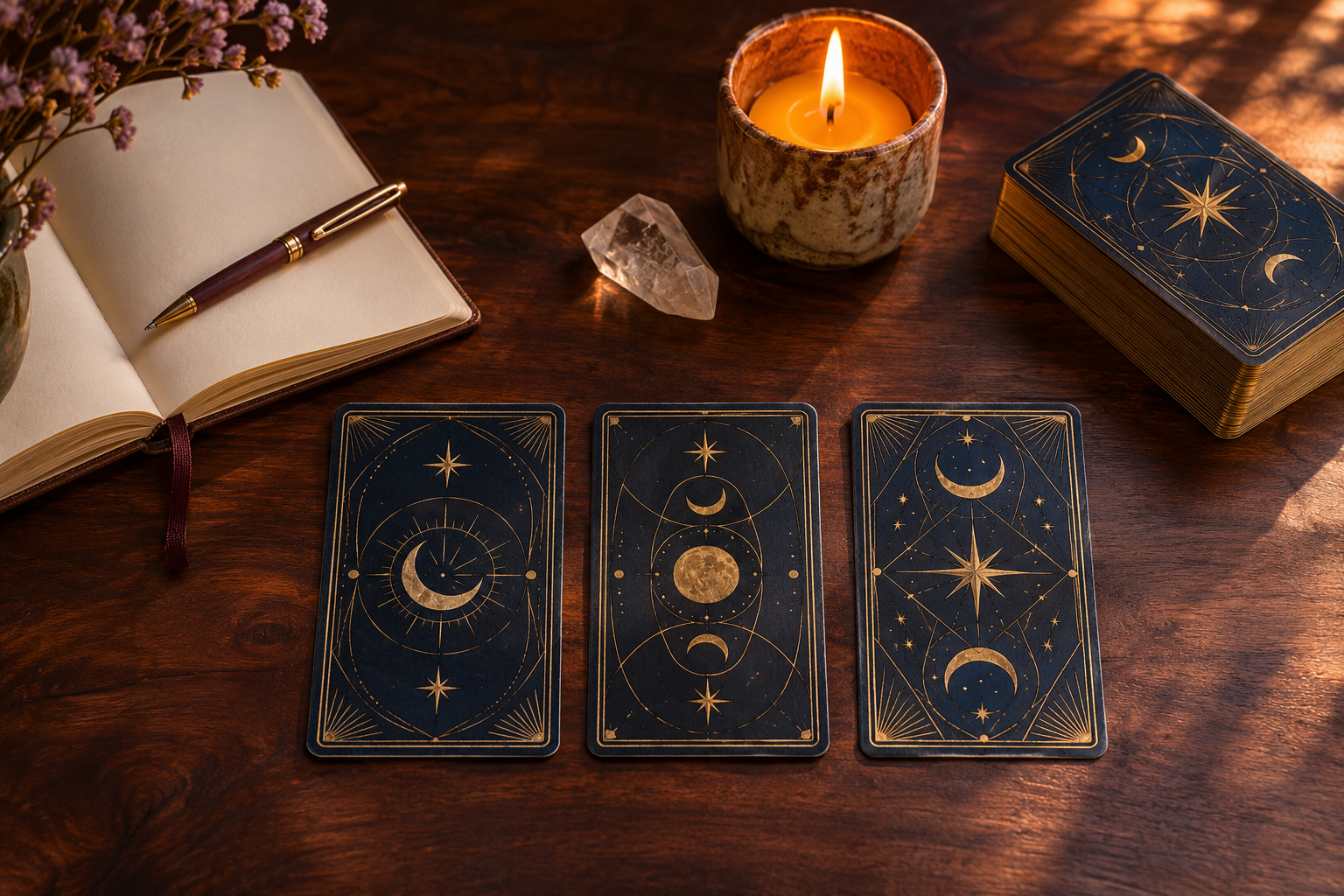
You bought the deck. You shuffled it beautifully. Then you pulled three cards, stared at them, and quietly googled every single one.
That’s normal. Tarot gets easier when you start with small spreads and ask questions the cards can actually help with. Here are 8 tarot spreads for beginners, from one card to five, plus a few tips that’ll save you from redrawing until you like the answer.
Before you start: ask better questions
The cards are great at helping you notice things. They’re less great at yes-or-no predictions, and asking “Will he text me?” four times in a row tends to end in a pile of Swords.
Try questions that start with “what” or “how”:
- What do I need to notice about this situation?
- How can I support myself this week?
- What’s getting in my way right now?
8 tarot spreads for beginners
1. One card a day

Pull one card each morning and ask, “What do I need to know today?” Write down the card and one sentence about it. At night, check whether it showed up in your day. This is the single best way to learn the deck.
2. Past, present, future
The classic three-card spread. Card one is what led here, card two is where you are, and card three is where things are heading if nothing changes. That last bit matters: the future card is a direction, and you’re allowed to change course.
3. Situation, obstacle, advice
Card one describes the situation, card two shows what’s in the way, and card three offers a next step. It’s practical, and it works for almost any question.
4. Mind, body, spirit
A gentle check-in. One card for your thoughts, one for your physical energy and one for your spiritual life. Great for Sunday evenings.
5. Start, stop, continue
What should I start doing? What should I stop? What should I keep doing? This one is sneaky good for goals and habits.
6. The new moon spread
Three cards at the new moon: what I’m calling in, what will help it grow, and what I need to release to make room.
7. The decision spread
Lay out two cards for Option A and two for Option B: one for what each path offers and one for what it costs. Add a fifth card in the middle for what you need to remember while you choose.
8. The five-card cross
A center card for the heart of the matter, then one each for what’s above (your hopes), below (your roots), behind (the past) and ahead (what’s coming). It’s a nice step up before you tackle the full Celtic Cross.
Tips for reading as a beginner
- Keep a tarot journal. Your own notes become your best guidebook.
- Read the picture first. What’s happening in the image? How does it make you feel? Then check the meaning.
- Don’t redraw for a better answer. If a card stings, sit with it for a day.
- Reversed cards are optional. Leave them out until upright meanings feel comfortable.
Want a workbook to practice with?
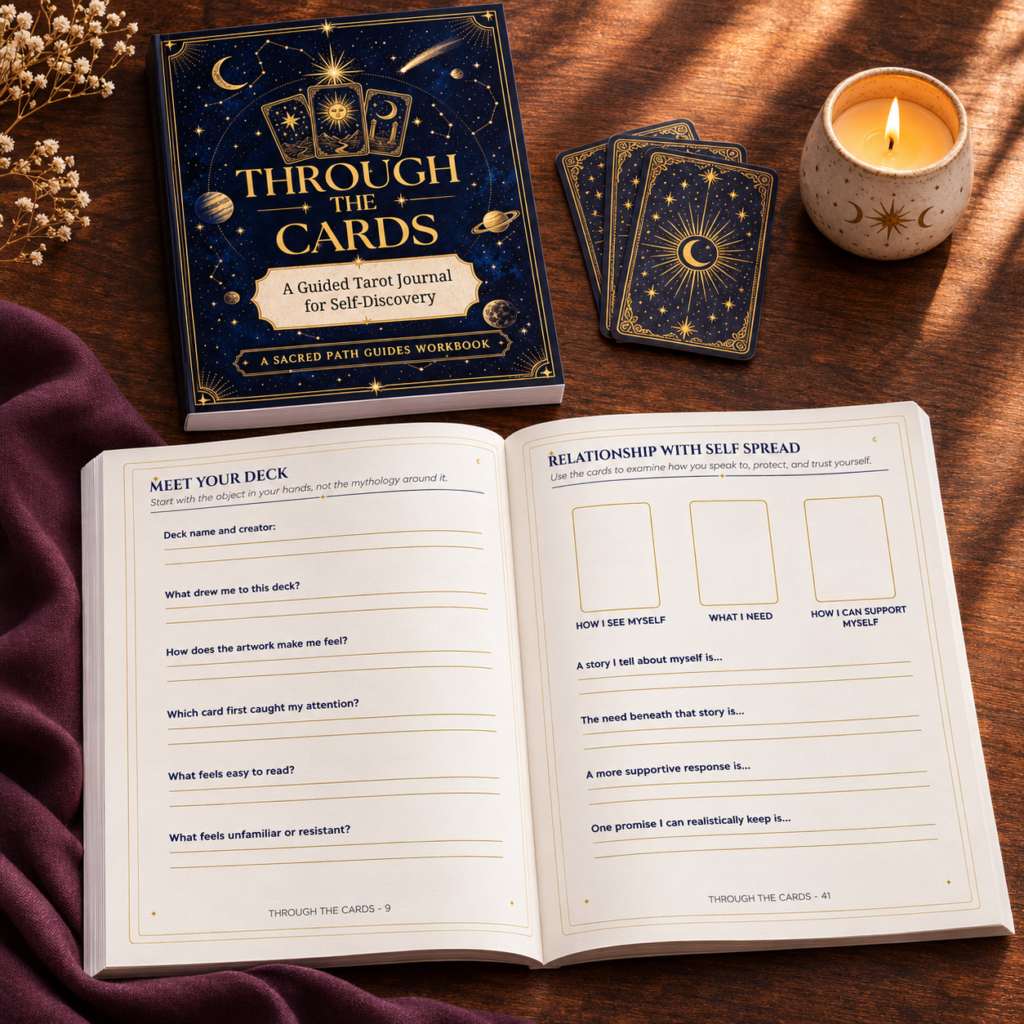
Through The Cards is a tarot workbook built for reflection, so every prompt asks what a card wants you to notice in your own life right now. It’s a calm way to learn the deck, especially on days you’re already running on fumes.
More for your divination practice:
- Psychic Development Grimoire: structure for building your intuition as a skill
- The Still Voice: a guided journal for spirit guide and higher self connection
- Which Witch Are You?: a 57-page workbook exploring 25 kinds of witches
- Tarot for Business Workbook: 17 spreads for business decisions
If you’re a tarot reader or run a witchy shop, all of them come with PLR rights, so you can rebrand them and sell them alongside your readings.
Shuffle, pull and notice
You don’t need to memorize 78 meanings before you start. Pull one card tomorrow morning and write one sentence. That’s a real tarot practice, and it’s yours.
Run a witchy business? Grab the free I Bought It, Now What? guide. It walks you through turning PLR like Through The Cards into products, posts and emails you can actually sell.
Save this for later: pin it to your witchy board so it’s there when you need it.