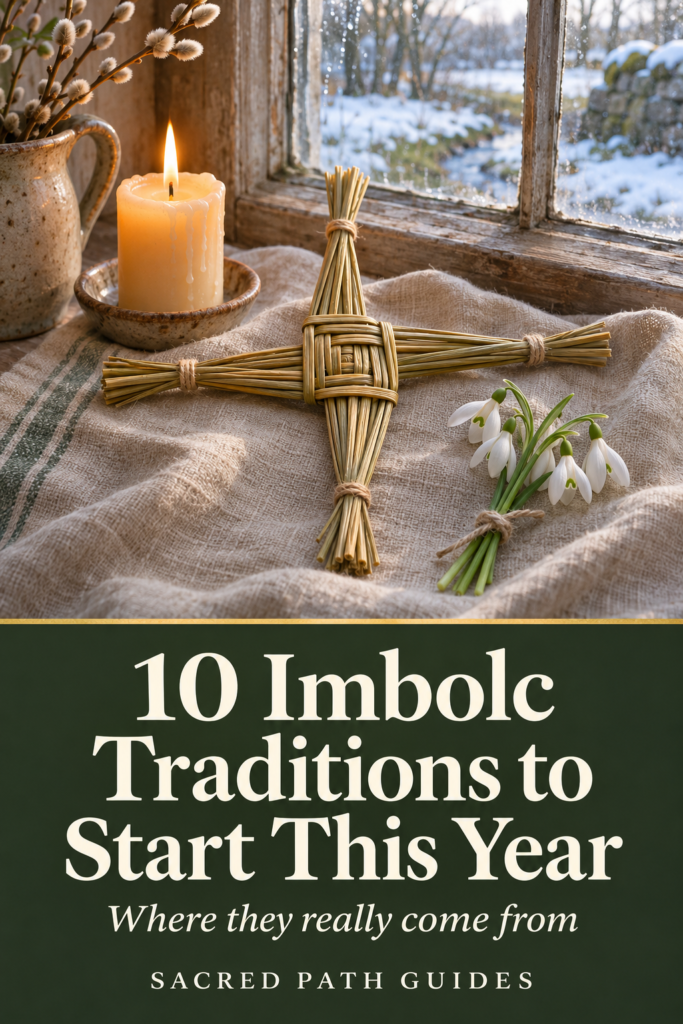
10 Imbolc Traditions to Start This Year (Plus Where Each One Really Comes From)
Imbolc is the sabbat for people who are done with winter but winter is not done with them. It lands on February 1, smack in the middle of the gray, slushy stretch where the holidays are over, the light is barely back, and everyone is a little feral.
Which is exactly why I like it. Imbolc doesn’t ask for a big party. It asks you to notice that the days are getting longer, light a candle, and maybe clean one thing.
It’s tied to Brigid, who shows up in Irish tradition as a goddess and later as a saint, and the two have been tangled together for about fifteen hundred years. The name Imbolc is old too, and nobody fully agrees on what it means. The most common guesses are “in the belly,” for pregnant ewes, or a word for ewe’s milk, since lambing season starts now.
Most of the traditions below come from Irish and Scottish folk customs recorded in the 1800s and 1900s, on and around St. Brigid’s Day. A few are modern Pagan additions. You’ll know which is which, and you can pick the ones that fit your house, your weather, and how much you’ve got left in the tank by February.
The traditions
1. Weave a Brigid’s cross
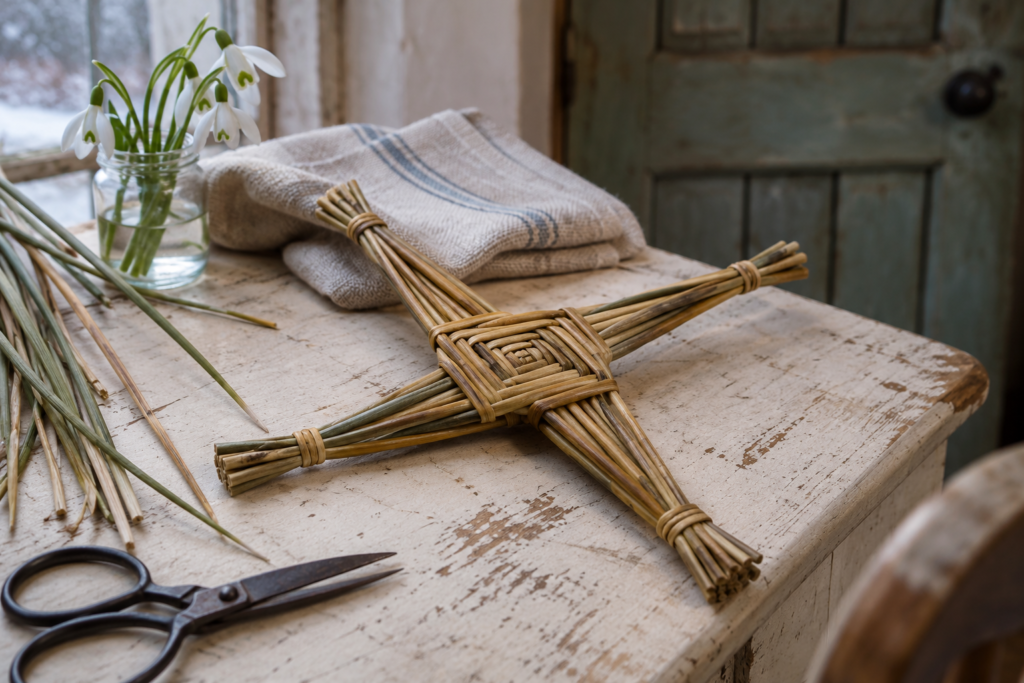
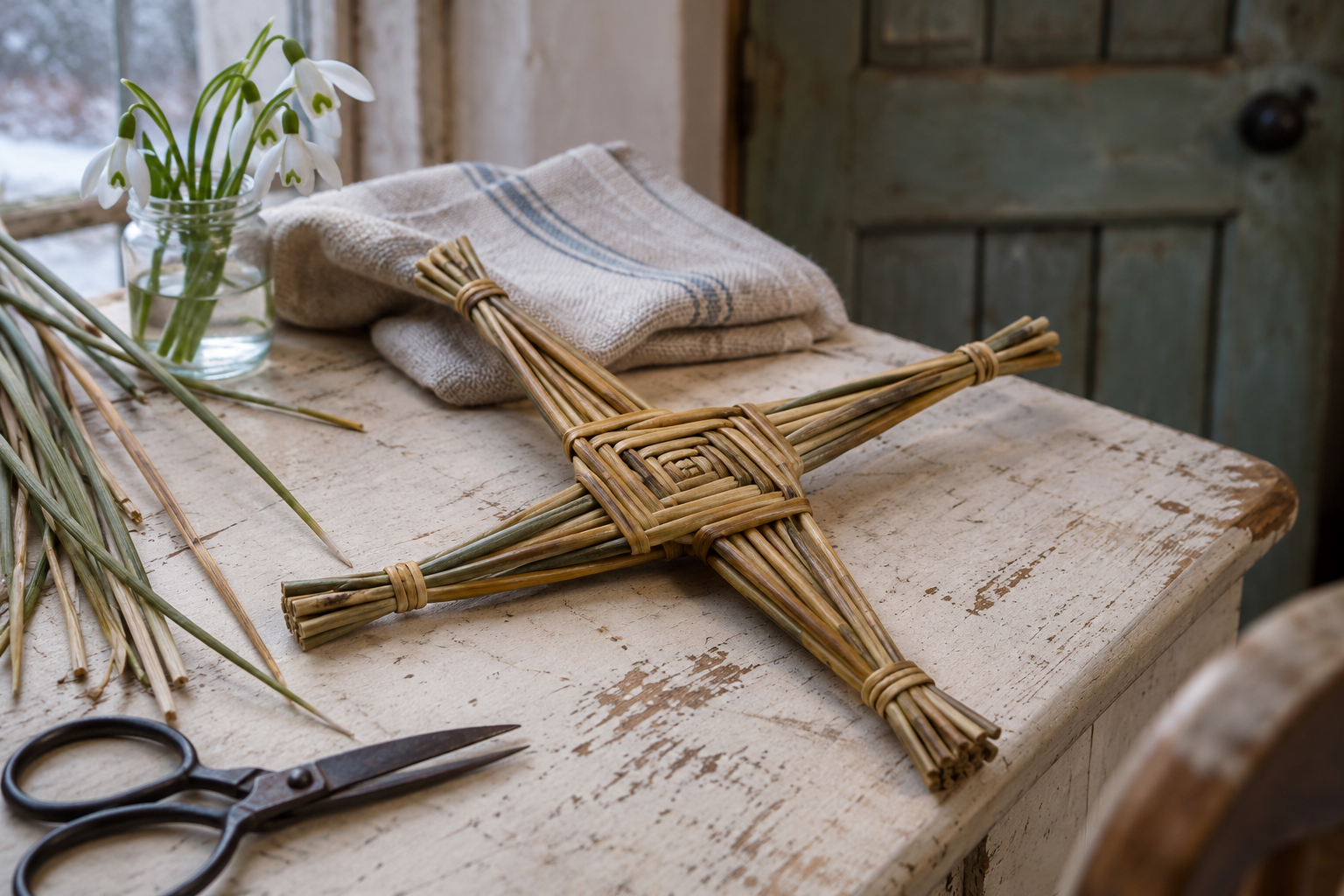
The four-armed cross woven from rushes is the best-known Imbolc tradition. In Ireland, families made new ones on St. Brigid’s Eve and hung them over doors or in the rafters to protect the house and animals for the year, then burned or kept the old one. It’s a documented folk custom, and the style varies by region, including three-armed versions for barns.
No rushes nearby? Paper straws, pipe cleaners or long strips of cardstock work fine. Hang it over the front door and call your house protected.
2. Make a bed for Brigid
In Scotland and Ireland, people made a little bed by the hearth on Brigid’s Eve, often with a doll or a sheaf of oats in it, and invited her in for the night. The folklorist Alexander Carmichael recorded the Scottish version, including the greeting “Bride is come, Bride is welcome,” in his Carmina Gadelica in 1900.
A basket with a small cloth and a candle nearby counts. Some people check the ashes or the bed in the morning for signs she visited.
3. Carry a Brídeog
The Brídeog is a straw or rush doll dressed up to represent Brigid. In parts of Ireland, groups of young people carried one from house to house on St. Brigid’s Eve, collecting treats and blessings like a very cold, very wholesome version of trick-or-treating.
Make a simple doll from wheat, corn husks or fabric scraps, and give her a spot on your altar until spring.
4. Leave a cloth out for Brigid
The brat Bríde, or Brigid’s mantle, is a strip of cloth left outside on Brigid’s Eve. The idea was that Brigid passed by overnight and blessed it, and the cloth was kept all year and used for healing and comfort.
Use a ribbon, a scarf or a clean washcloth. Hang it on a doorknob or a fence, bring it in the next morning, and keep it somewhere you’ll see it.
5. Light all the candles
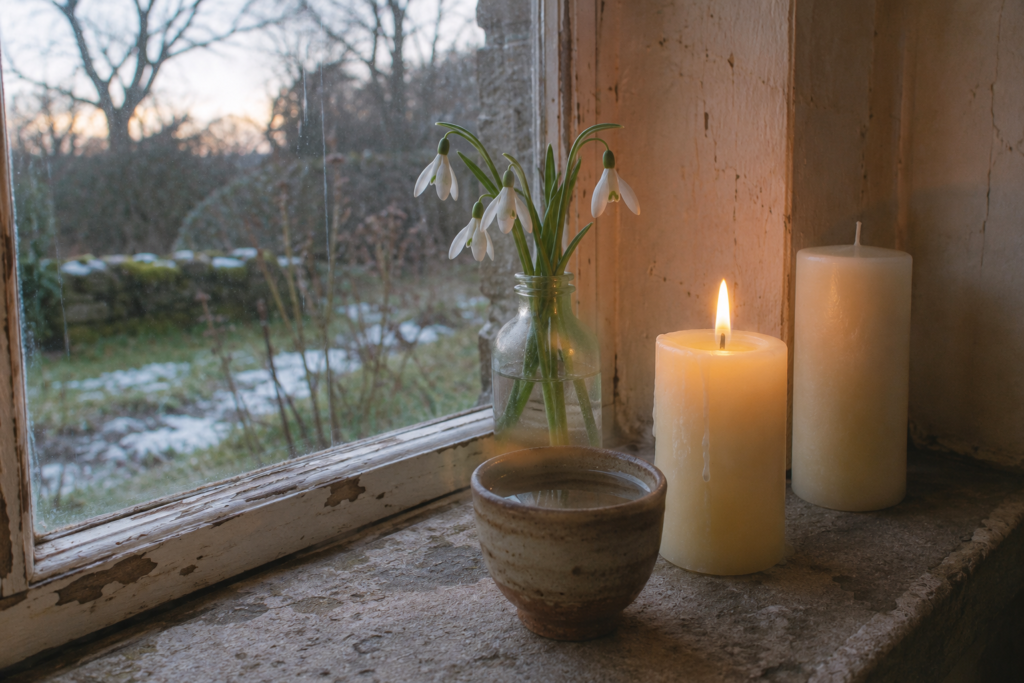
February 2 is Candlemas, a Christian feast where churches blessed the candles for the year. Modern Pagans folded candle lighting into Imbolc to welcome the returning light, and it fits so well it feels ancient.
Light one candle in every room at dusk, or just one on the kitchen table. Electric counts. So does turning on every lamp in the house and declaring it a ritual.
6. Tend a flame for Brigid
The Welsh-Norman writer Gerald of Wales described nuns at Kildare in Ireland keeping a fire burning for St. Brigid in the 1180s, with a hedge around it that no man was allowed to cross. The flame was put out in the 1500s, and the Brigidine Sisters relit it in Kildare in 1993.
Keep a candle going while you’re home on Imbolc (blow it out when you leave or sleep). Or join one of the modern flame-keeping groups that take turns tending a candle for Brigid.
7. Visit a well, or bless your water
Brigid is linked with healing wells all over Ireland, and people still visit them around February 1 to pray, leave ribbons and take home water.
No holy well in your zip code? Same. Fill a bowl of water, set it by a candle overnight, and use it to water your plants or wash your face the next morning.
8. Watch the weather
Carmichael also recorded a Scottish rhyme about a serpent coming out of its hole on Brigid’s Day to check the weather. German immigrants brought a Candlemas version with a badger to Pennsylvania, where it turned into Groundhog Day.
So yes, Groundhog Day is basically a weather divination ritual with a rodent and a top hat. Step outside on February 1, look around, and make your own forecast for spring.
9. Bake bread and set out butter
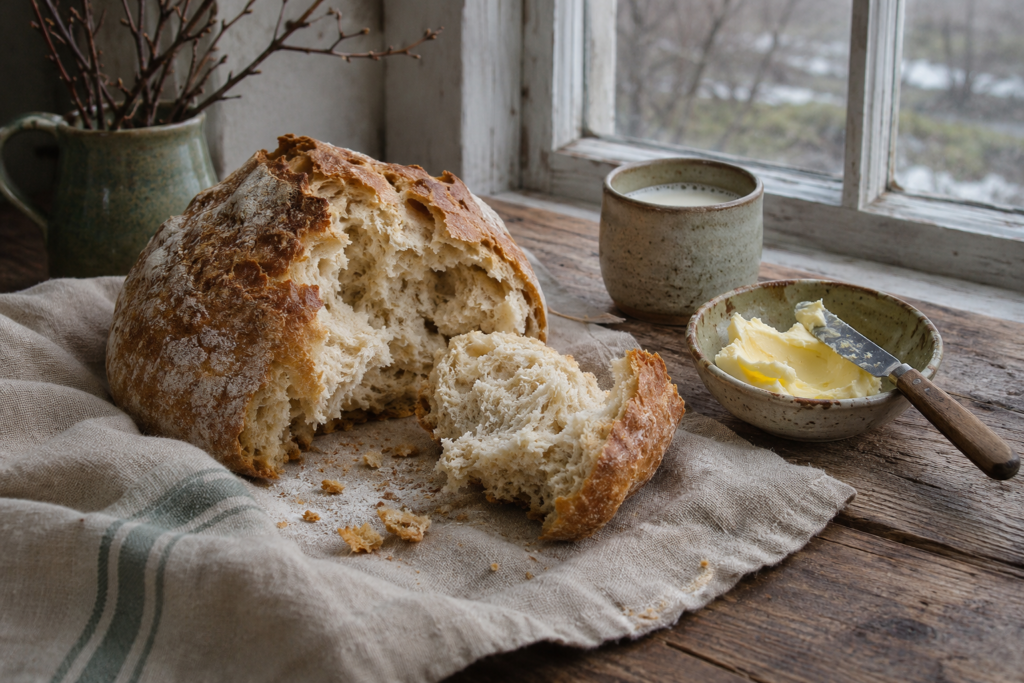
Imbolc falls at the start of lambing, when milk came back after a long winter, so dairy and bread show up all over Brigid’s Day food traditions. Families often had a special meal on Brigid’s Eve and left some food out for her.
Warm bread with good butter is a full Imbolc menu. Leave a slice on the windowsill overnight for Brigid, or for the birds, which is honestly the same energy.
10. Clean one thing
Spring cleaning at Imbolc is mostly modern, borrowed from the season’s themes of fresh starts and clearing out. It’s still a good idea.
You don’t have to deep clean the house. Clean your altar, one drawer, or the junk pile by the door, open a window for five minutes, and let the old winter air out.
Want the whole Imbolc season done for you?
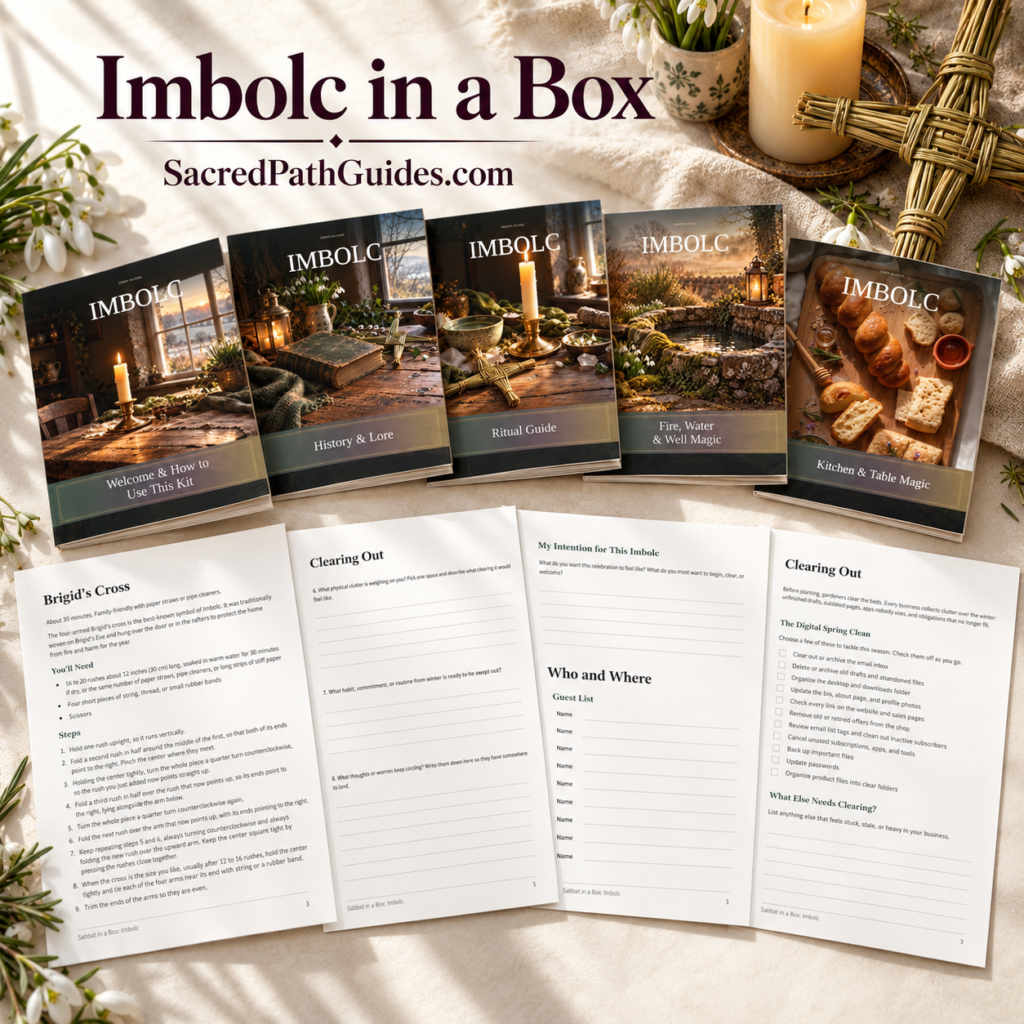
Imbolc in a Box is the full version of this post: twelve booklets covering Brigid’s history and lore (with the same honesty about what’s old and what’s modern), a ritual guide, fire, water and well magic, recipes, twelve Imbolc plants with safety notes, crafts, 30 journal prompts and a celebration planner.
If you run a witchy business, it also comes with private label rights, a Spring Seeds business workbook, 60 seasonal content ideas and ready-to-use promo copy. Every booklet is editable in Canva, so you can rebrand it and sell it as your own.
Pick one and call it Imbolc
You don’t need all ten. A ribbon on the doorknob overnight is a whole Imbolc. So is buttered toast eaten by candlelight while you glare at the snow.
The days are already getting longer, whether you wove a perfect cross or not. Brigid is famously patient with people who are still a little tired from December.
Run a witchy business? Grab the free I Bought It, Now What? guide. It walks you through turning PLR like Imbolc in a Box into products, posts and emails you can actually sell.
Save this for later: pin it to your witchy board so it’s there when you need it.