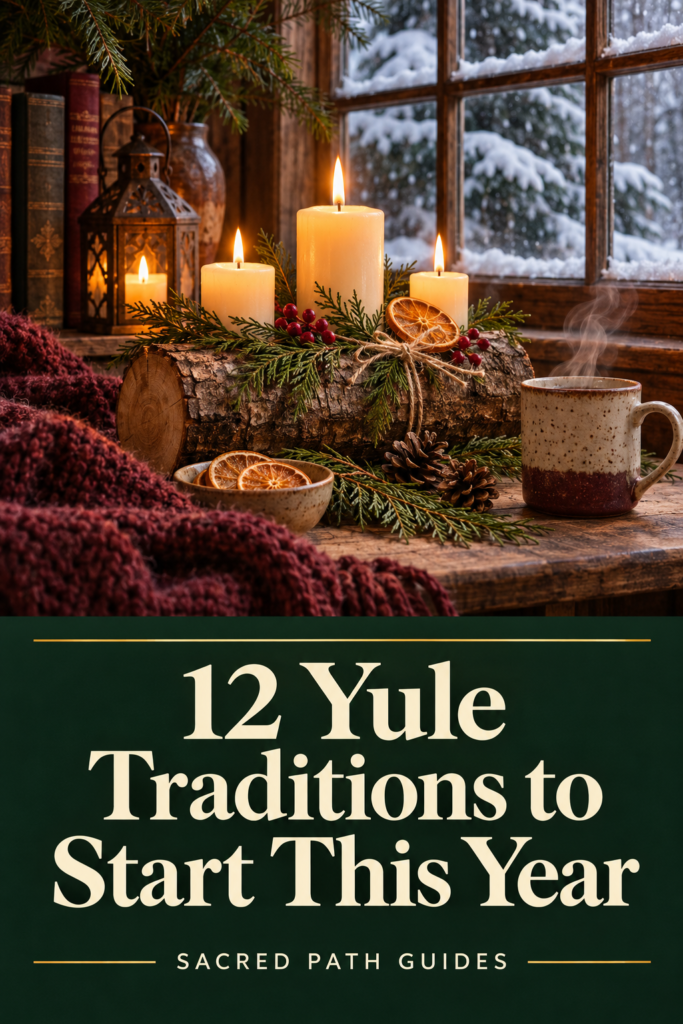
12 Yule Traditions to Start This Year (Plus Where Each One Really Comes From)
Confession up front: I’m not someone who plans her life around the Wheel of the Year. Weather is about as seasonal as my brain gets most months. My parents started openly practicing when I was in high school, so I grew up adjacent to this stuff, and I still mostly let my energy and my brain fog run the calendar.
Yule is an easy one to love, because the whole holiday is basically permission to sit in the dark with a candle and a snack and wait for things to get better, which is a spiritual practice I was already doing anyway.
The winter solstice lands on December 21 this year. The word Yule comes from the Old English and Old Norse names for a midwinter season and festival, and the early English monk Bede mentions it back in the 700s. Almost everything else people say about “ancient Yule” gets fuzzy fast. The traditions below range from genuinely old to a few hundred years old with a dramatic backstory bolted on, and a couple were invented in the 20th century by people who really wanted them to be ancient.
All of them are worth doing. You get to know which is which, and then you pick the ones that fit the energy you’ll realistically have this December.
The traditions
1. Burn a Yule log (or eat one)
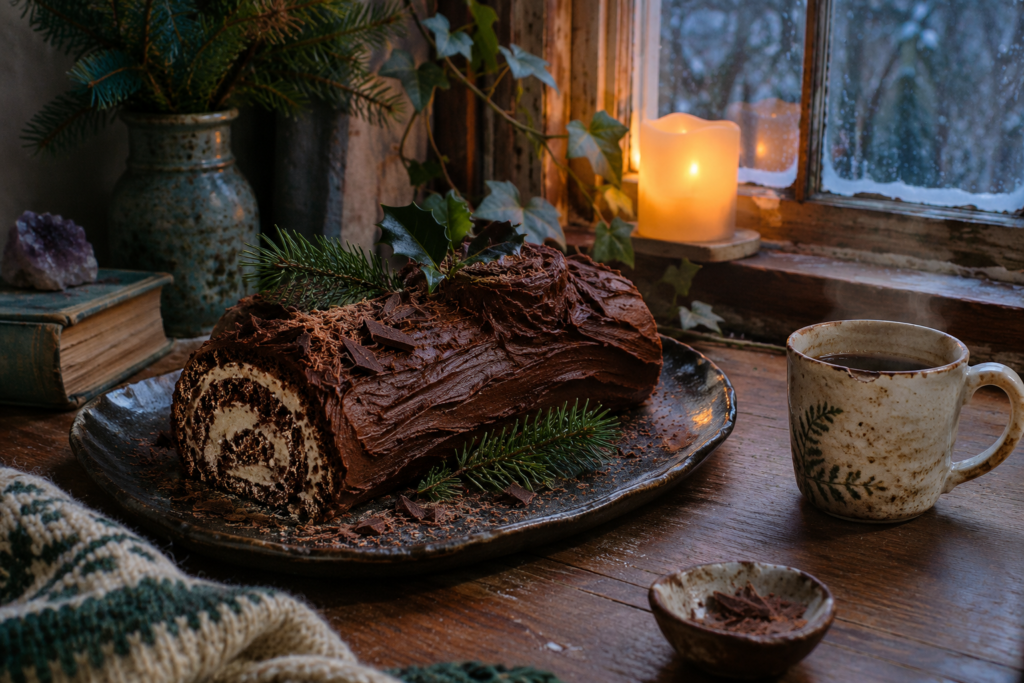
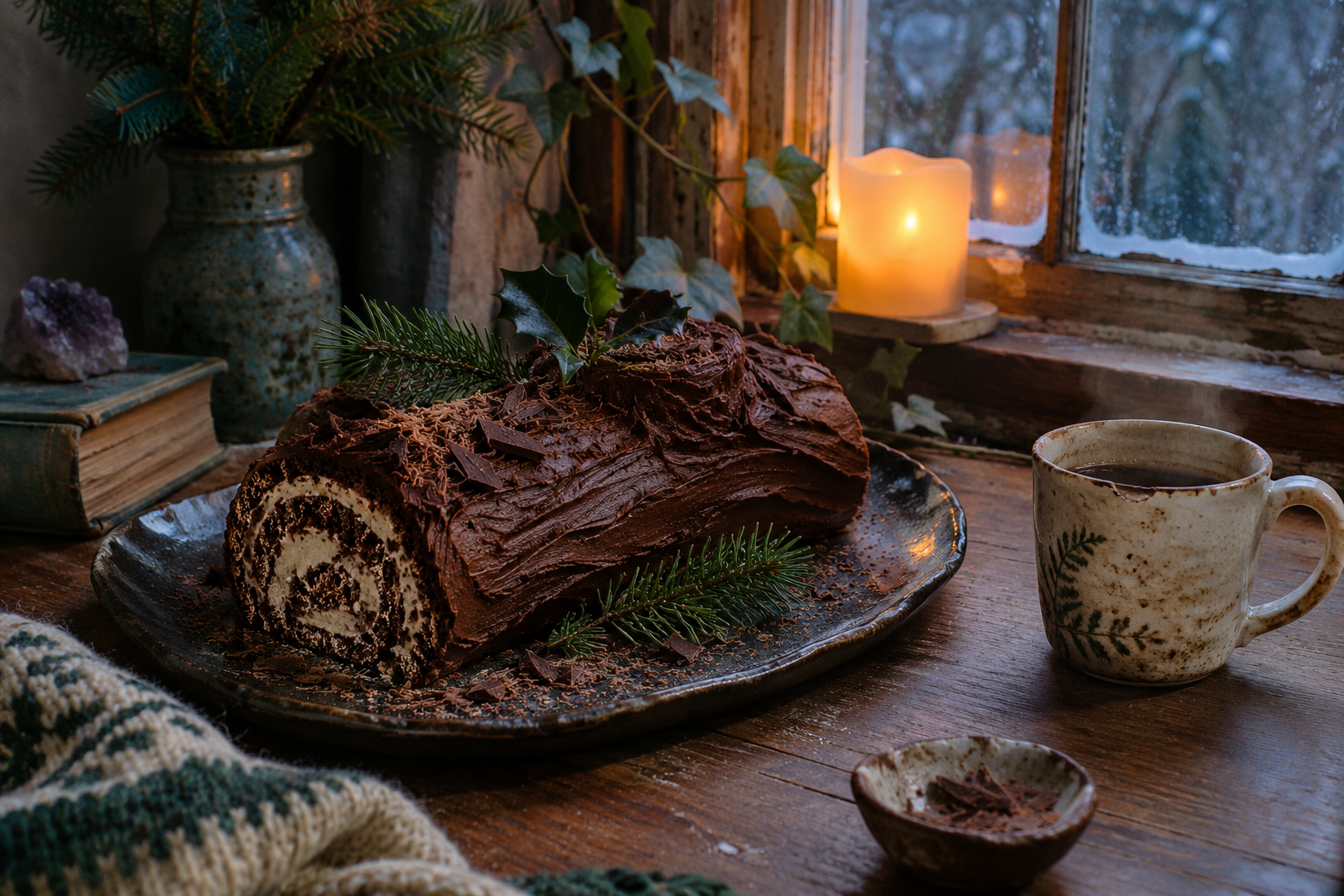
The big-log-on-the-hearth tradition shows up in European records from the 1600s, including in the poet Robert Herrick’s Christmas verses. The claim that it goes straight back to Viking bonfires is mostly guesswork. The chocolate version, the bûche de Noël, is a 19th-century French bakery invention, and I consider it the superior log.
No fireplace? Drill three holes in a small log, add candles, and call it done. Or buy the cake. Nobody is grading you.
2. Bring the evergreens inside
Romans decked their homes with greenery for the midwinter festivals of Saturnalia and Kalends, and medieval England went hard on holly and ivy. The idea is simple: green things that stay alive through winter remind you that you will too.
A grocery store bundle of pine counts. Keep holly and mistletoe berries away from kids and pets, because both are toxic.
3. Keep a longest night vigil
Staying up through the longest night to greet the sunrise is a modern Pagan favorite. The solstice sunrise itself has mattered to people for a very long time. Newgrange in Ireland, built around 3200 BCE, lights up its inner chamber with the sunrise on the days around the winter solstice.
You don’t have to stay up all night. Set an alarm, watch the sun come up with coffee, and say one thing you’re glad to still be here for.
4. Put a light in the window
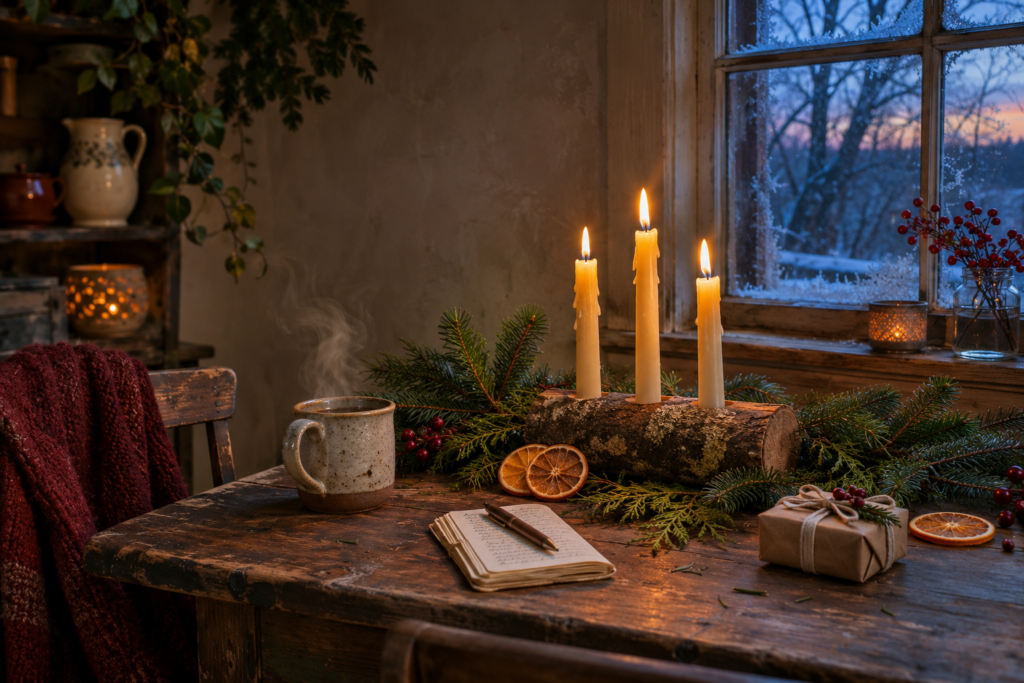
Candles in windows show up across a lot of winter traditions, from Irish Christmas customs to plain old “we have power and you’re welcome here.” For Yule it doubles as a welcome-back to the sun.
Use an LED candle if you have cats, curtains, or a brain that forgets things are lit. I have all three.
5. Go wassailing
Wassail comes from an Old English toast meaning “be well.” In parts of England, people went house to house with a spiced drink, and cider country had orchard wassails where they sang to the apple trees for a good harvest. Those orchard wassails traditionally happen around Twelfth Night in early January.
Make a pot of spiced cider, toast your houseplants, and tell them to keep living. Same energy.
6. Hang mistletoe (with the real backstory)
The Roman writer Pliny the Elder described druids cutting mistletoe from oak trees with a golden sickle. He didn’t tie it to winter, and he’s the only source for most of it. Kissing under mistletoe is an 18th-century English custom.
Hang it high, out of reach of pets, and enjoy the drama.
7. Tell the Oak King and Holly King story
Two brother-kings who trade the year back and forth: the Holly King rules the dark half, and at Yule the Oak King wins and the light starts growing. It’s a lovely story. It’s also mostly 20th century, shaped by Robert Graves and later Wiccan writers, then retold so often it sounds old.
Tell it anyway, especially with kids. Just know you’re telling a modern myth, which is allowed.
8. Honor Mothers’ Night
Bede wrote that the pagan English called the night before midwinter Modranicht, “night of the mothers.” That one line is basically all we have, so nobody knows what they actually did.
Which leaves you free to fill it in. Light a candle for the mothers, grandmothers and mother-figures in your line, or for the ones who mothered you when your own family couldn’t.
9. Bake sun bread
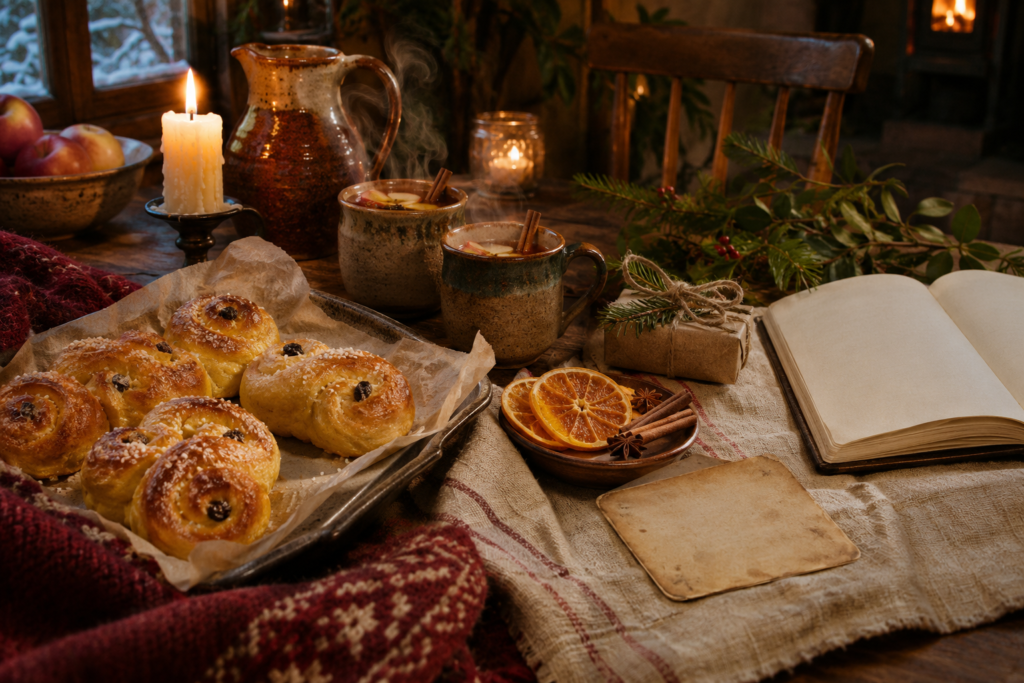
In Sweden, saffron buns called lussekatter come out on St. Lucia’s Day, December 13, a Christian feast of light in the darkest stretch of the year. Golden, round or spiral breads have become a modern Yule favorite for the same reason: they look like the sun.
Boxed roll dough plus a pinch of turmeric or saffron counts as sun bread. The sun is not picky.
10. Give small gifts
Romans swapped little gifts at Saturnalia, often candles and small clay figures. Yule gifts work best small and personal: a candle, a jar of homemade spice blend, a handwritten note.
If the holidays drain your wallet and your nervous system, this is the tradition to scale way down.
11. Meet the Yule goat
The straw Yule goat is a Scandinavian tradition with older folk roots. Since 1966, the Swedish town of Gävle has built a giant straw goat every December, and it gets set on fire so often that the burning has become its own unofficial tradition.
Make a little straw or paper goat for your altar. Please don’t set it on fire.
12. Spend the Twelve Nights reflecting
The twelve nights between Christmas and Epiphany carry a lot of European folklore. In German-speaking regions they’re the Rauhnächte, when people cleansed their homes with smoke and paid attention to their dreams, sometimes reading each night as a forecast for one month of the coming year.
Keep a notebook by the bed for twelve nights. Write down one dream, mood, or thought each morning, then look back at it in January. It’s year-end reflection without the spreadsheet.
Want the whole Yule season done for you?
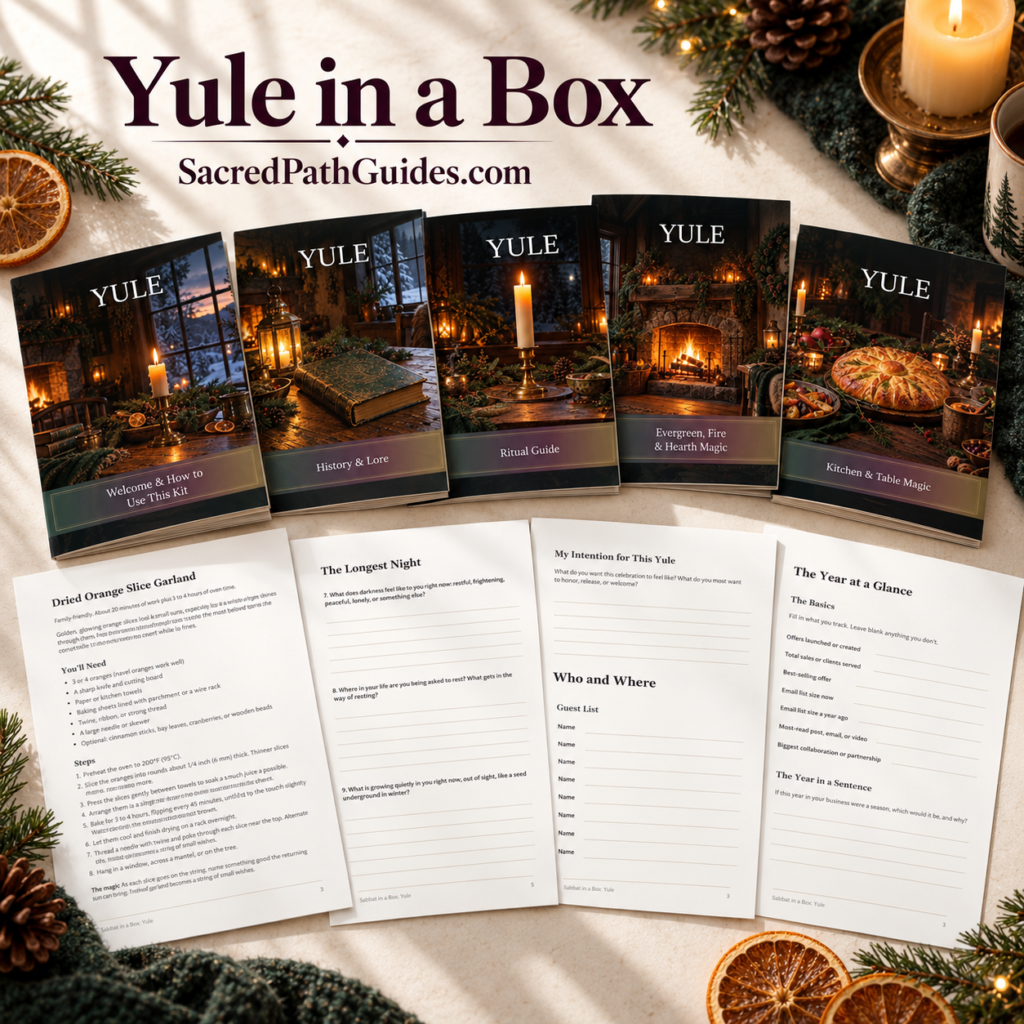
Yule in a Box is the full version of this post: twelve booklets covering the history and lore (with the same honesty about what’s old and what’s modern), a ritual guide, evergreen and hearth magic, recipes, twelve Yule plants with safety notes, crafts, 30 journal prompts and a celebration planner.
If you run a witchy business, it also comes with private label rights, a year-end business reflection workbook, 60 seasonal content ideas and ready-to-use promo copy. Every booklet is editable in Canva, so you can rebrand it and sell it as your own.
Pick one and call it Yule
You don’t need all twelve. One candle in the window on the longest night is a whole Yule. So is a chocolate log eaten standing up in the kitchen at 11pm.
The light comes back on December 22 whether you did the perfect ritual or not. That’s my favorite thing about this sabbat.
Run a witchy business? Grab the free I Bought It, Now What? guide. It walks you through turning PLR like Yule in a Box into products, posts and emails you can actually sell.
Save this for later: pin it to your witchy board so it’s there when you need it.